Home Assistant has become one of the most popular open-source platforms for smart home automation. For users who want deeper visibility into electricity usage, integrating a smart energy meter with Home Assistant is a powerful way to turn raw energy data into actionable automations and insights.
This guide explains how smart energy meters connect to Home Assistant, how energy data is used in automations, and why this integration is especially valuable for advanced home energy management.
Why Integrate a Smart Energy Meter with Home Assistant?
A smart power meter Home Assistant integration allows users to monitor and control energy consumption within a single, unified smart home interface.
Key benefits include:
-
Real-time power monitoring
-
Long-term energy statistics
-
Automation based on energy thresholds
-
Integration with HVAC, EV chargers, and solar systems
Instead of checking separate apps, users can manage energy data directly inside Home Assistant dashboards.
Integration Logic: How It Works
At a high level, the integration follows this logic:
-
The smart energy meter measures power and energy consumption
-
Data is transmitted via Wi-Fi, Zigbee, or Ethernet
-
Home Assistant receives data through an integration or gateway
-
Energy entities are created inside Home Assistant
-
Data is visualized and used for automations
This structure allows Home Assistant to treat the energy meter as a native data source.
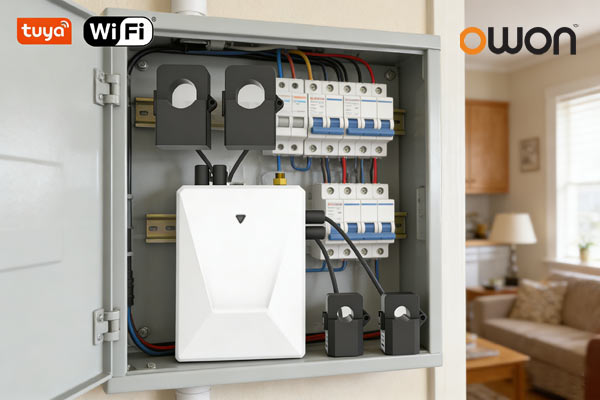
Common Integration Methods
Direct Integration
Some smart energy meters communicate directly with Home Assistant using supported protocols or APIs. This approach offers:
-
Lower latency
-
Fewer system dependencies
-
Simpler architecture
Gateway-Based Integration
Other setups rely on a gateway (for example, Zigbee or MQTT) that bridges meter data into Home Assistant. This method is often used in larger or more complex smart home systems.
Both approaches are widely used, and the choice depends on network architecture and user preferences.
Energy-Based Automation Examples
Automation 1: High Load Alert
Home Assistant can trigger alerts when household power usage exceeds a defined threshold.
Example logic:
-
If total power > predefined limit
-
Send a mobile notification
-
Log the event for analysis
This helps users detect abnormal consumption or unexpected device behavior.
Automation 2: HVAC Optimization
Energy data can be combined with temperature sensors to optimize HVAC operation.
Example scenario:
-
Reduce HVAC output when energy usage spikes
-
Shift operation during off-peak hours
-
Improve comfort while controlling energy costs
Automation 3: EV Charging Control
For homes with electric vehicles, Home Assistant can:
-
Delay charging until off-peak periods
-
Stop charging when household load is too high
-
Resume charging automatically when conditions improve
This prevents overloads and improves overall energy efficiency.
Energy Dashboards and Visualization
Home Assistant’s energy dashboard provides:
-
Daily, weekly, and monthly energy reports
-
Historical consumption trends
-
Visual comparison between devices or systems
When combined with a smart energy meter, these dashboards offer deep insight into how and when energy is used in the home.
Why This Integration Is Especially Powerful
Compared with standalone energy apps, Home Assistant offers:
-
Full local control
-
High customization
-
Integration with hundreds of smart home devices
-
Advanced automation capabilities
For technically inclined users, a smart energy meter Home Assistant setup becomes the foundation of a truly intelligent home energy system.
When integrated into a broader home energy monitoring system, smart energy meters provide the data foundation needed for advanced automation and long-term energy optimization.
Conclusion
Integrating a smart energy meter with Home Assistant enables precise energy monitoring, flexible automations, and deeper insight into household electricity usage. By connecting real-time energy data with smart home logic, users can move beyond passive monitoring and actively optimize how energy is consumed.
For users already invested in the Home Assistant ecosystem, this integration represents one of the most effective ways to build a data-driven and energy-aware smart home.