As energy costs continue to rise across Europe and other global markets, businesses and homeowners are increasingly looking for ways to understand and control their electricity consumption. A smart home energy monitor provides real-time insights into how energy is used within a building, helping users identify inefficiencies, optimize consumption, and reduce operating costs.
Unlike traditional electricity meters that only record total energy usage, modern smart home energy monitoring systems combine advanced sensors, communication technologies, and cloud analytics to deliver detailed energy visibility.
This article explains what a smart home energy monitor is, how it works, and why it has become an essential component of modern energy management solutions.
What Is a Smart Home Energy Monitor?
A smart home energy monitor is a device or system that tracks electricity consumption in real time and provides detailed insights through a mobile app, cloud platform, or building management system.
Instead of simply showing monthly energy usage, a smart energy monitor allows users to see:
- Real-time power consumption
- Voltage and current levels
- Energy usage trends
- Power factor and frequency
- Energy production from solar systems
Many modern solutions integrate with IoT ecosystems and smart home platforms, allowing automated energy management across multiple devices.
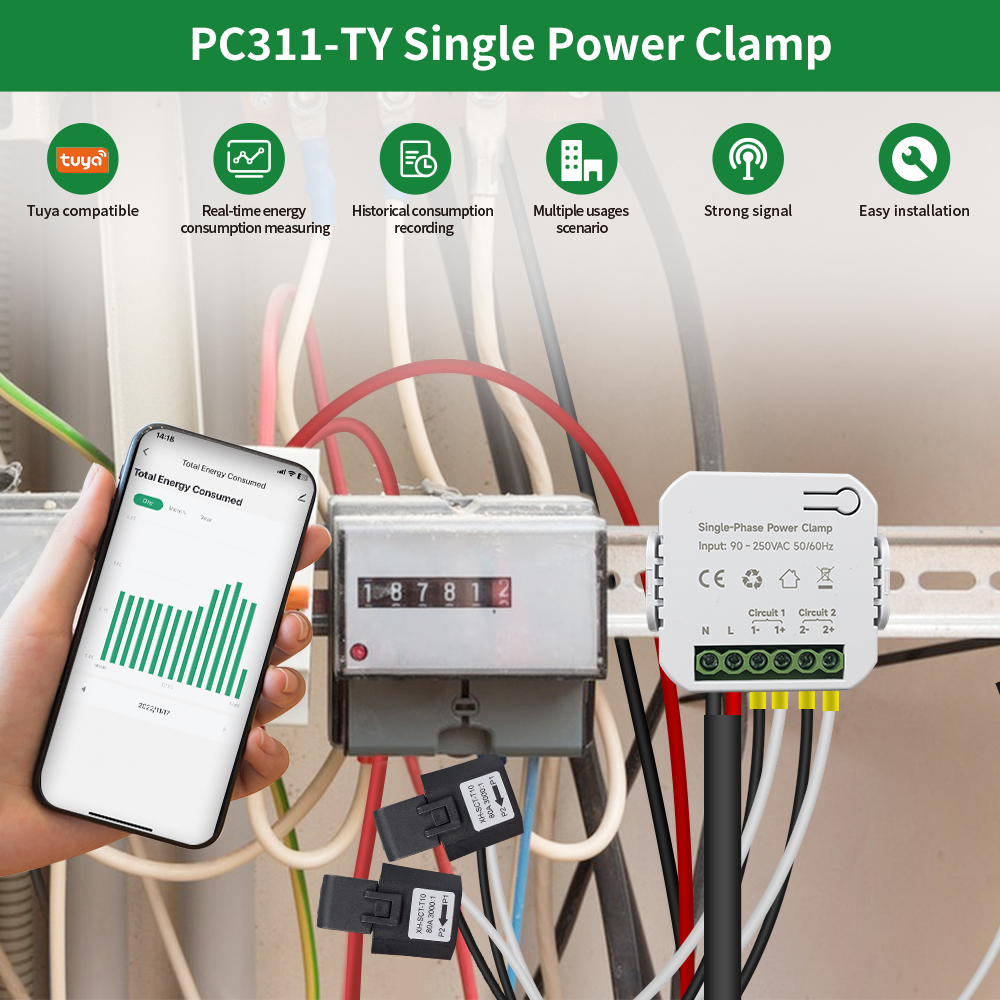
For example, a smart energy monitor with CT clamp can detect energy usage patterns and help facility managers optimize equipment operation schedules or identify abnormal power consumption.
How Does a Smart Home Energy Monitoring System Work?
A typical smart home energy monitoring system consists of several components that work together to collect and analyze electrical data.
1. Energy Measurement Hardware
The core component is the energy meter, which measures electrical parameters such as voltage, current, power, and energy consumption.
Depending on the application, different types of meters may be used:
- DIN rail energy meters installed inside electrical panels
- Clamp-based energy monitors using CT sensors for easy installation
- Single-phase or three-phase meters for residential or commercial systems
These devices continuously measure electrical data from circuits or the entire building.
2. Data Communication
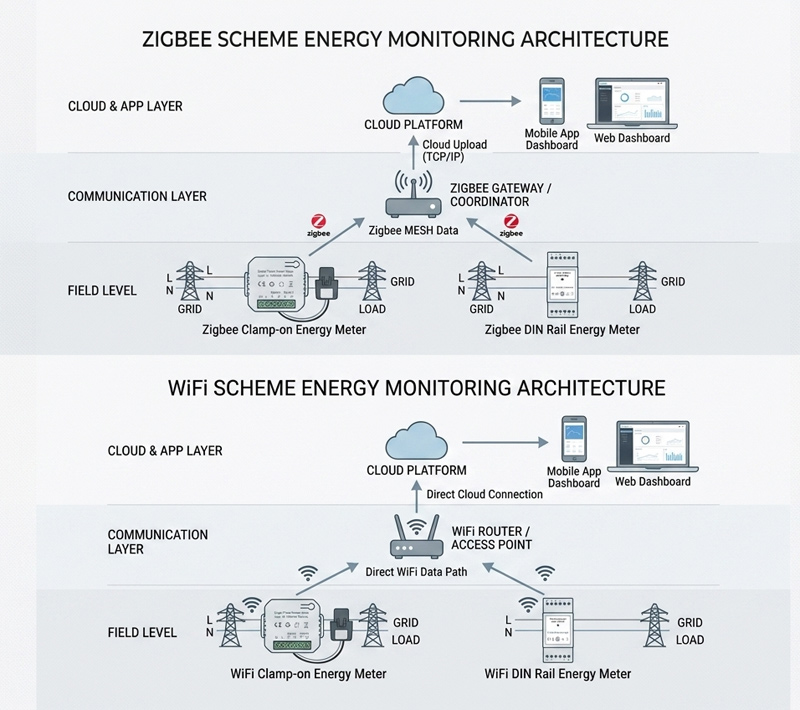
Once energy data is collected, it must be transmitted to a monitoring platform. Modern smart meters commonly use wireless communication technologies such as:
- WiFi connectivity for direct cloud access
- Zigbee networking for smart home ecosystems
- IoT gateways for large energy management systems
These communication methods allow the smart home energy monitor to deliver real-time information to users through dashboards and mobile apps.
3. Cloud Analytics and Visualization
After the data reaches the monitoring platform, cloud software analyzes energy usage patterns and presents them through visual dashboards.
Users can typically view:
- Daily, weekly, and monthly energy usage
- Historical consumption trends
- Circuit-level energy monitoring
- Solar energy production and consumption
For building operators and system integrators, these insights are essential for improving operational efficiency and energy planning.
Key Benefits of Using a Smart Home Energy Monitor
Deploying a smart home energy monitoring system offers several advantages for residential users, commercial facilities, and energy management professionals.
Real-Time Energy Visibility
Users can instantly see how much electricity their building is consuming, making it easier to identify inefficient appliances or equipment.
Cost Optimization
By understanding energy usage patterns, businesses can optimize operating schedules and reduce unnecessary electricity consumption.
Solar Energy Monitoring
Many modern systems support bi-directional measurement, allowing users to monitor both electricity consumption and solar energy production.
Energy Management Integration
Smart energy monitors can integrate with broader energy management platforms, enabling automated control strategies and advanced analytics.
Typical Applications of Smart Home Energy Monitoring
Smart energy monitoring technologies are widely used across multiple sectors.
Residential Energy Management
Homeowners use smart energy monitors to track electricity consumption, optimize appliance usage, and monitor solar power systems.
Commercial Buildings
Offices, retail stores, and public facilities use energy monitoring systems to improve operational efficiency and reduce energy costs.
Industrial Energy Optimization
Factories and industrial facilities deploy advanced smart meter home energy monitor solutions to monitor production lines and manage power distribution.
Choosing the Right Smart Home Energy Monitor
When selecting a smart energy monitoring solution, several factors should be considered:
- Electrical system type (single-phase or three-phase)
- Installation method (DIN rail or clamp-based sensors)
- Communication protocol (WiFi, Zigbee, or gateway-based systems)
- Integration with energy management platforms
For system integrators and distributors, choosing scalable and IoT-compatible energy monitoring devices ensures long-term flexibility and system expansion.
Conclusion
A smart home energy monitor provides the visibility needed to understand how electricity is consumed within a building. By combining advanced energy measurement technology with IoT connectivity and cloud analytics, modern smart home energy monitoring systems enable users to monitor consumption in real time, optimize energy efficiency, and support renewable energy integration.
As energy management becomes increasingly important for both residential and commercial environments, smart energy monitoring solutions are rapidly becoming a key component of modern electrical infrastructure.