Introduction
A wall outlet power meter is one of the simplest and most effective ways to understand how much electricity your appliances actually use. Whether in homes, offices, or commercial buildings, monitoring power consumption at the outlet level helps identify energy waste and improve efficiency.
Unlike traditional energy meters that measure total building consumption, an electric outlet meter provides real-time data for individual devices. This allows users to track exactly how much electricity is used by appliances such as heaters, computers, kitchen equipment, or air conditioners.
With the rise of smart energy systems, modern solutions such as Zigbee-enabled wall outlet power meters now offer remote monitoring, automation, and seamless integration into building management systems.
What Is a Wall Outlet Power Meter?
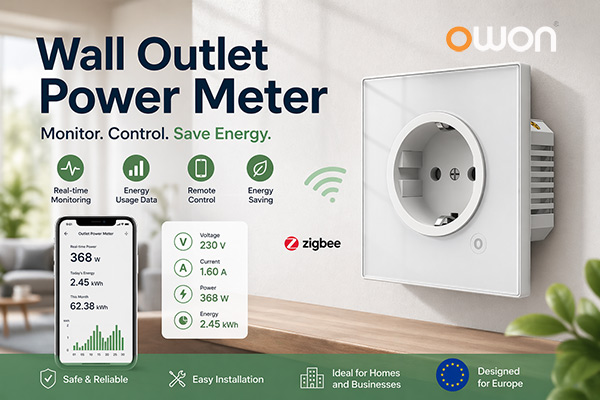
A wall outlet power meter (also called a wall outlet meter or electric outlet meter) is a device that measures the electricity consumption of appliances connected to a power outlet.
It typically tracks:
- Voltage (V)
- Current (A)
- Power consumption (W)
- Energy usage (kWh)
These devices are widely used in:
- Home energy monitoring
- Office equipment management
- Smart building energy systems
- Appliance testing and efficiency analysis
How Does an Outlet Power Meter Work?
An outlet power meter measures electricity flowing through a socket and calculates energy usage over time.
There are two main types:
1. Plug-in Power Meter (Watt Meter)
- Easy to install
- Suitable for residential use
- Limited scalability
Also known as a wall plug wattage meter, this type is commonly used for simple monitoring.
2. In-Wall Smart Socket with Metering
- Installed directly into the wall
- More stable and secure
- Suitable for long-term deployment
A modern example is a Zigbee wall outlet with energy monitoring, which combines:
- Real-time energy measurement
- Wireless communication
- Remote control and automation
These devices are ideal for smart homes and commercial energy systems.
Why Use a Wall Outlet Energy Monitor?
1. Identify High Energy Consumption Devices
Some appliances consume more power than expected. A wall outlet meter helps uncover hidden energy waste.
2. Reduce Electricity Costs
By understanding usage patterns, users can optimize device operation and reduce unnecessary consumption.
3. Enable Smart Control
Advanced smart sockets allow users to remotely control appliances and create automation schedules.
4. Support Energy Management Systems
For commercial projects, outlet-level monitoring provides granular data that supports energy optimization and sustainability goals.
For a deeper understanding of how smart sockets integrate into larger systems, refer to this Zigbee wall socket power meter guide。
Wall Outlet Power Meter vs Smart Plug
| Feature | Wall Outlet Power Meter | Smart Plug |
|---|---|---|
| Installation | In-wall or plug-in | Plug-in |
| Monitoring Accuracy | High | Medium |
| Scalability | High | Limited |
| Typical Use | Buildings, offices | Home automation |
While smart plugs are convenient, in-wall outlet meters offer better stability and scalability, especially in larger deployments.
Can You See How Much Electricity an Outlet Uses?
Yes.
A wall outlet power meter allows you to measure electricity usage in real time. Smart versions can also:
- Display consumption data via mobile apps
- Store historical energy usage
- Send alerts for abnormal consumption
This makes it easier to track and optimize energy use at the device level.
What Is the Best Outlet Power Meter?
The best outlet power meter depends on your needs:
- Home use → plug-in watt meters
- Smart homes → Wi-Fi smart plugs
- Commercial projects → Zigbee smart sockets
For example, the Owon’s Zigbee wall outlet with energy monitoring (WSP406) is ideal for projects that require:
- Real-time data tracking
- Remote control
- Integration with energy management systems
Are Home Energy Monitors Worth It?
Yes, especially when:
- Energy costs are rising
- Multiple devices are used daily
- Energy efficiency is a priority
Outlet-level monitoring provides more precise data than whole-home systems, helping users make smarter decisions about energy use.
FAQ
What is a wall plug wattage meter?
A wall plug wattage meter is a plug-in device that measures how much electricity an appliance consumes when connected to a power outlet.
Is there a way to measure electricity usage from a single outlet?
Yes. A wall outlet power meter can track energy usage for individual devices in real time.
What is the difference between an outlet meter and a smart socket?
An outlet meter measures electricity usage, while a smart socket also provides remote control and automation features.
Are Zigbee outlet meters better than Wi-Fi plugs?
Zigbee devices are more suitable for large-scale deployments because they use a mesh network, making them more stable and scalable.
Conclusion
A wall outlet power meter is a powerful tool for understanding electricity usage at the device level. From simple plug-in watt meters to advanced smart sockets, these devices help improve energy efficiency, reduce costs, and enable smarter energy management.
As buildings become more connected, combining outlet-level monitoring with wireless technologies like Zigbee provides a scalable solution for modern energy challenges.