Electricity meters have evolved significantly over the past few decades. Traditional electric meters were designed simply to record how much electricity a building consumes. Today, with the growth of digital energy systems, the smart energy meter has become a key component of modern energy monitoring infrastructure.
Understanding the difference between a smart energy meter vs regular meter is important for homeowners, facility managers, and energy professionals who want greater visibility into electricity consumption and energy efficiency.
This article explains how these two technologies differ in terms of functionality, data access, security considerations, and overall user experience.
What Is a Regular Electric Meter?
A regular electric meter—often called a traditional or analog electricity meter—has been used by utility companies for decades to measure total electricity consumption.
These meters typically operate using mechanical components or simple digital counters that track how much electricity flows into a property over time.
Common characteristics include:
-
Measures total electricity consumption (kWh)
-
Requires manual reading by utility companies
-
Limited data visibility for consumers
-
No remote connectivity
-
No real-time monitoring
Traditional meters are reliable and simple, but they provide very little insight into how electricity is actually used throughout the day.
What Is a Smart Energy Meter?
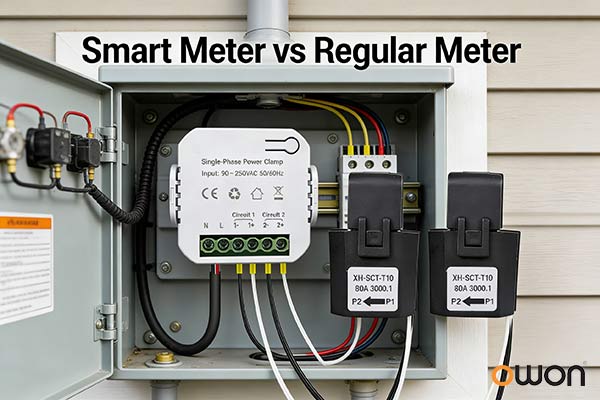
A smart energy meter is a digitally connected device designed to measure and transmit detailed electricity usage data.
Unlike traditional meters, smart energy meters can communicate with mobile applications, cloud platforms, or energy management systems.
Modern smart meters can measure parameters such as:
-
Voltage
-
Current
-
Active power
-
Power factor
-
Real-time energy consumption
Many modern systems also provide historical energy analytics, allowing users to analyze consumption trends over time.
Some wifi smart power meters can report energy data at very short intervals—sometimes every few seconds—allowing highly detailed monitoring of electricity usage patterns.
Smart Energy Meter vs Regular Meter: Key Differences
| Feature | Smart Energy Meter | Regular Electric Meter |
|---|---|---|
| Data Monitoring | Real-time monitoring | Periodic manual reading |
| Data Visibility | Mobile apps & cloud dashboards | Utility bill only |
| Energy Insights | Detailed consumption analytics | No usage insights |
| Connectivity | WiFi, Zigbee, or IoT networks | No connectivity |
| Remote Access | Supported | Not available |
| Automation | Can integrate with smart home systems | Not supported |
| Energy Optimization | Helps identify energy waste | No optimization tools |
The key difference is data transparency. Smart energy meters allow users to understand how energy is consumed in real time, while traditional meters only record cumulative usage.
Evolution of Electricity Meter Technology
Electricity metering technology has evolved through several stages:
| Era | Meter Technology | Main Capability |
|---|---|---|
| Early 1900s | Mechanical meters | Basic consumption measurement |
| 1980–2000 | Digital meters | Improved accuracy |
| 2000–2015 | Advanced metering infrastructure (AMI) | Remote reading |
| Today | Smart energy meters | Real-time monitoring and IoT integration |
The shift toward digital energy infrastructure is largely driven by the need for improved energy efficiency, grid visibility, and renewable energy integration.
Energy Management and User Experience
One of the biggest advantages of smart energy meters is the user experience.
With traditional electric meters, consumers typically only learn about their electricity usage once a month through their utility bill.
Smart energy meters allow users to:
-
Track electricity consumption in real time
-
Identify high-consumption appliances
-
Monitor solar generation and grid export
-
Analyze energy trends over time
This level of visibility allows homeowners and businesses to make more informed decisions about energy usage.
Security and Privacy Considerations
Smart meters are sometimes associated with privacy concerns because they transmit energy data through digital networks.
However, modern smart metering systems usually incorporate several security measures:
-
Encrypted data communication
-
Secure authentication protocols
-
Protected cloud platforms
Additionally, energy data typically reflects electricity usage patterns rather than personal information, making privacy risks relatively limited compared to many other connected devices.
Why Smart Energy Meters Are Becoming the New Standard
Several factors are driving the global adoption of smart energy meters:
Growing energy efficiency awareness
Consumers and businesses increasingly want to understand and reduce energy consumption.
Renewable energy integration
Smart meters can support solar monitoring and bidirectional energy measurement.
Smart home ecosystems
Connected homes require devices that can communicate with automation platforms.
Grid modernization
Utility companies benefit from real-time grid data and improved demand forecasting.
These trends are making smart energy meters a fundamental component of modern energy systems.
Conclusion
The difference between a smart energy meter vs regular meter goes far beyond basic electricity measurement.
Traditional electric meters simply record how much electricity has been consumed, while smart energy meters provide real-time data, detailed energy insights, and integration with modern energy management systems.
As energy infrastructure continues to evolve toward digitalization and connectivity, smart energy meters are becoming an essential tool for improving energy transparency, efficiency, and sustainability.