As interest in smart energy management continues to grow, many users search for terms like “ZigBee smart meter”, “ZigBee smart meter monitor”, or “ZigBee smart meter Home Assistant”. However, the term ZigBee smart meter can refer to different types of devices depending on the region, application, and system architecture.
This article explains what people usually mean by a ZigBee smart meter, how energy data is read in ZigBee-based systems, and why ZigBee power clamp sensors have become a practical alternative for residential and commercial energy monitoring.
What Does “ZigBee Smart Meter” Actually Mean?
In some regions, especially the UK, the term smart meter often refers to utility-installed electricity meters that communicate using the ZigBee Smart Energy Profile (SEP). These devices are deployed and managed by energy suppliers and are not freely configurable by end users.
However, outside of utility-controlled environments, ZigBee smart meter is commonly used as a general term for ZigBee-based energy monitoring devices, including:
-
ZigBee energy monitors
-
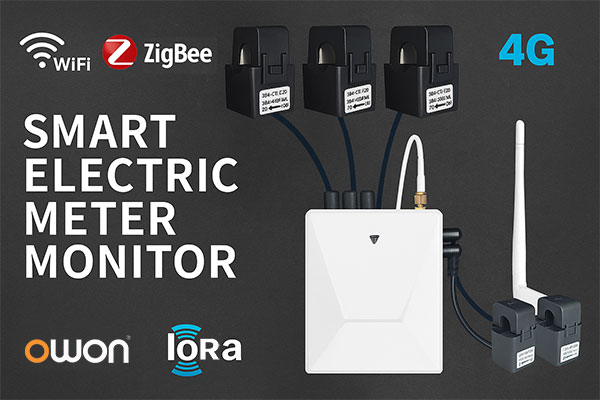
Clamp-based current transformers (CT sensors)
-
ZigBee-enabled sub-metering solutions
These devices operate independently of utility infrastructure and are widely used in home automation systems, building management platforms, and IoT energy monitoring projects.
How to Read ZigBee Smart Meter Data
A common question users ask is: “How do you read data from a ZigBee smart meter?”
Unlike traditional electricity meters with physical displays, ZigBee-based energy monitoring systems typically work through the following structure:
-
Energy Measurement Device
Measures electrical parameters such as current, voltage, power, and energy consumption. -
ZigBee Gateway or Coordinator
Collects data wirelessly from ZigBee devices using the ZigBee Home Automation (HA) profile. -
Monitoring Platform or Dashboard
Displays real-time and historical energy data via:-
Web dashboards
-
Mobile applications
-
Home automation platforms
-
This architecture allows users to analyze power usage, detect abnormal loads, and optimize energy consumption without interacting directly with the meter hardware.
Using ZigBee Smart Meters with Home Assistant
Home Assistant has become one of the most popular open-source platforms for smart home and energy management. As a result, “ZigBee smart meter Home Assistant” is a high-intent search term.
In practice, most Home Assistant energy monitoring setups use:
-
ZigBee HA-compatible energy sensors
-
ZigBee-to-MQTT or native ZigBee integrations
-
Clamp-based current transformers
Why Power Clamp Sensors Are Popular
ZigBee power clamp sensors offer several advantages when integrated with Home Assistant:
-
Non-invasive installation – No need to disconnect wiring
-
Retrofit-friendly – Ideal for existing electrical panels
-
Multi-phase monitoring – Suitable for three-phase and multi-load systems
-
Real-time measurement – Supports automation and alerts
These characteristics make power clamp sensors especially suitable for advanced Home Assistant users, system integrators, and energy management professionals.
Do ZigBee Smart Meters Need an App?
Another frequent search query is “ZigBee smart meter app”. In most ZigBee-based systems, the app is not built into the meter itself.
Instead, the app or user interface is provided by:
-
The ZigBee gateway
-
A cloud-based IoT platform
-
A local energy management system
This separation offers greater flexibility. Users can choose platforms that best fit their requirements, such as:
-
Home Assistant
-
Building management systems (BMS)
-
Custom energy dashboards
As a result, ZigBee energy monitoring solutions are often preferred in professional and semi-professional environments where customization and data ownership are important.
ZigBee Smart Meter Monitor for Residential and Commercial Use
When users search for “ZigBee smart meter monitor”, they are typically looking for a reliable way to track energy usage, rather than a utility-certified meter.
ZigBee-based energy monitoring systems are widely applied in:
-
Smart homes
-
Apartment sub-metering
-
Commercial buildings
-
Data centers
-
Retail and office spaces
Clamp-based ZigBee energy monitors are particularly effective in scenarios that require:
-
Monitoring multiple circuits or loads
-
Measuring three-phase electrical systems
-
Deploying energy monitoring without downtime
Because these devices work independently from the utility grid, they are suitable for both residential optimization and commercial energy analysis.
Choosing the Right ZigBee Energy Monitoring Solution
When selecting a ZigBee smart meter or energy monitoring device, consider the following factors:
-
ZigBee profile compatibility (e.g. HA 1.2)
-
Measurement accuracy
-
Single-phase vs three-phase support
-
Integration with Home Assistant or other platforms
-
Installation method (direct wiring vs clamp-based)
For users seeking a flexible and scalable solution, ZigBee power clamp sensors provide an effective balance between accuracy, safety, and system compatibility.
Final Thoughts
The term ZigBee smart meter covers a wide range of devices and use cases. While utility-installed smart meters are limited to specific ecosystems, ZigBee-based energy monitoring solutions offer openness, flexibility, and integration freedom.
For home automation enthusiasts, system integrators, and energy management professionals, ZigBee power clamp sensors combined with platforms like Home Assistant represent a practical and future-proof approach to smart energy monitoring.