For system integrators, facility managers, and smart building solution providers, the promise of occupancy-based automation is clear: enhanced energy efficiency, improved space utilization, and smarter operations. Yet, a persistent gap exists between this promise and reality. Traditional Passive Infrared (PIR) sensors, the longstanding industry staple, fail to detect stationary occupants, leading to lights shutting off in occupied conference rooms or HVAC systems cycling inaccurately. This fundamental flaw creates occupant discomfort, diminishes trust in automation systems, and caps the achievable return on investment. This guide explores the limitations of legacy technology, examines the data behind modern solutions, and presents a professional pathway to achieving reliable, nuanced presence detection that truly unlocks the potential of smart buildings.
The Core Limitation: Why “Motion Detection” is Not “Occupancy Sensing”
The primary pain point in commercial and sensitive residential deployments (like nursing homes or private residences) is the critical difference between motion and presence. A person working quietly at a desk, reading in a chair, or sleeping in a bed presents little to no detectable infrared motion for a standard PIR sensor.
-
The Data on Failure: In such static scenarios, PIR-based sensors will typically report a room as “unoccupied” within a timeframe of 5 to 15 minutes. This triggers false “vacant” states, disrupting automation workflows designed for efficiency and comfort.
-
The Real-World Cost: The consequence is more than an annoyance. It directly undermines key value propositions:
-
Energy Wastage: Systems may not enter efficient modes even when properly occupied.
-
Safety & Compliance Gaps: In care settings, the inability to confirm stationary presence can compromise safety protocols.
-
User Experience Erosion: Occupants learn to distrust the system, often manually overriding automations, negating their benefits.
-
This gap is precisely why specialized searches like “zigbee bed occupancy sensor” are trending for applications in senior care, hospitality, and high-comfort residential projects, where understanding true room status is non-negotiable.
The Technology Shift: Radar-Based Sensing for True Presence
The solution to the PIR dilemma lies in adopting sensors with fundamentally different detection technology. To understand the leap forward, we must contrast the old standard with the new paradigm.
The Legacy Challenge of PIR Sensors
Traditional PIR (Passive Infrared) sensors operate by detecting changes in infrared heat signatures across segmented zones. Their fundamental requirement is that a heat source, like a person, must move across these zones. This is why they excel in corridors or doorways but fail completely in environments where occupants are largely stationary. Their performance is also more susceptible to installation factors like mounting height and airflow.
The Modern Solution: Radar for Micro-Movement Detection
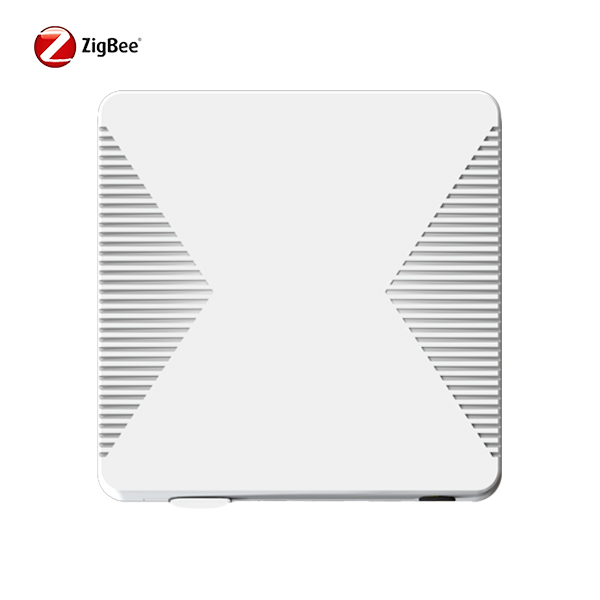
Advanced Zigbee occupancy sensors now utilize millimeter-wave Doppler radar (e.g., at 10GHz). This technology works on a different principle: it emits low-power radio waves and analyzes the reflected signal for microscopic variations caused by movement. The key advantage is its sensitivity to micro-movements such as the rise and fall of a chest from breathing or the subtle pulse of a heartbeat.
This technological shift enables true stationary occupancy detection. A person sitting still at a desk, resting in a bed, or standing motionless is no longer “invisible” to the system. Furthermore, high-quality radar sensors are less sensitive to challenging mounting conditions and often come with robust, commercial-grade specifications such as wide operating temperature ranges (e.g., -20°C to +55°C) and IP ratings for dust and moisture resistance.
Beyond Sensing: The Role in a Professional Zigbee Ecosystem
For a system integrator, selecting a sensor goes beyond its core detection capability. In a large-scale Zigbee deployment, every powered device plays a role in network health. A significant advantage of modern, mains-powered occupancy sensors is their ability to function as Zigbee routers. Unlike simple end devices, routers actively relay signals, extending the range and strengthening the self-healing mesh of the entire wireless network. This transforms a sensor from an isolated data point into a pillar of network infrastructure, a critical consideration for the reliability of a building-wide IoT system.
Implementing Reliable Presence Detection: Key Selection Criteria
Moving from theory to deployment requires careful specification. When selecting a sensor for professional outcomes, evaluate beyond basic protocol compatibility.
-
Prioritize Detection Methodology: Explicitly confirm the use of radar or similarly advanced technology for static presence detection. The specification “detects stationary posture” is a key indicator of capability beyond basic PIR.
-
Validate Professional Specifications: For B2B and OEM projects, industrial-grade reliability is paramount. Require clear data on environmental robustness and Zigbee 3.0 compliance for guaranteed interoperability with platforms from Zigbee2MQTT to proprietary BMS.
-
Plan for the Network: Choose sensors that can function as Zigbee routers to enhance the overall mesh network’s stability and coverage, a vital factor for commercial-scale deployments.
Case in Point: The Value of an Engineered Solution
Consider the challenge of a system integrator tasked with reducing energy consumption in a modern office building. Standard motion sensors in workstations and meeting rooms lead to complaints and overrides, as lights and air conditioning shut off during focused work or long meetings.
By deploying radar-based Zigbee occupancy sensors, the integrator can now access accurate, real-time occupancy data. Automation rules can be refined: lights dim after 15 minutes of vacancy but only turn off after 30; HVAC systems switch to a low-power “standby” mode instead of shutting down completely when the room is quietly occupied. This balances energy savings with occupant comfort, delivering the promised ROI and building trust in the automated system. For manufacturers building smart building starter kits or OEM automation bundles, incorporating this level of intelligent sensing is a significant competitive differentiator.
Conclusion: Specifying for Intelligence, Not Just Automation
The evolution from basic motion detection to true occupancy sensing marks a maturity point for the IoT industry. For professionals, the choice is no longer just about adding wireless controls but about deploying distributed intelligence that provides accurate, actionable data about space utilization.
This requires partnering with manufacturers who understand the distinction at a hardware engineering level. It requires sensors designed not as commodities, but as reliable data-gathering nodes built for the rigors of commercial service. As a leading OEM/ODM manufacturer with in-house design and stringent quality control, Owon embodies this approach. Owon OPS305 Zigbee Occupancy Sensor is engineered to meet this precise need—transforming the challenge of stationary detection into a solved problem, and enabling our partners to deliver next-generation automation solutions with confidence.
Ready to move beyond basic motion detection?
Explore the detailed specifications and technical data of our radar-based Zigbee Occupancy Sensor to see how true presence detection can elevate your next project. For system integrators and OEM clients with unique requirements, our team specializes in tailored firmware development and sensor customization to seamlessly integrate into your specific solution stack.