What Is a WiFi Smart Energy Meter?
A WiFi smart energy meter is a device that measures electricity usage in real time and transmits the data wirelessly over WiFi to a mobile app, web dashboard, or cloud-based energy platform. Unlike traditional utility meters, which mainly support billing, WiFi-enabled energy meters are designed for continuous monitoring, analysis, and remote access.
By providing visibility into how and when electricity is consumed, WiFi smart energy meters help users move from reactive energy management to data-driven decision-making.
Why WiFi Smart Energy Meters Are Gaining Adoption
Electricity costs are rising, systems are becoming more complex, and energy efficiency is no longer optional. Across residential, commercial, and light industrial environments, WiFi smart energy meters are increasingly adopted because they enable:
-
Real-time electricity usage monitoring
-
Remote access without on-site inspections
-
Identification of peak loads and abnormal consumption
-
Verification of energy-saving upgrades
-
Data support for automation and optimization
For many users, the key value lies not in the meter itself, but in the actionable insights it provides.
Main Types of WiFi Smart Energy Meters
WiFi smart energy meters are not one-size-fits-all. They vary based on electrical system type and installation method. Understanding these differences is essential before selecting a device.
Classification by Electrical Phase
-
Single-phase WiFi smart energy meters
Common in residential and small commercial installations. -
Split-phase WiFi energy meters
Widely used in North America for 120/240V systems. -
Three-phase WiFi energy meters
Designed for commercial buildings and industrial equipment.
Classification by Installation Method
-
DIN rail WiFi energy meters
Mounted inside distribution boards for clean, scalable sub-metering. -
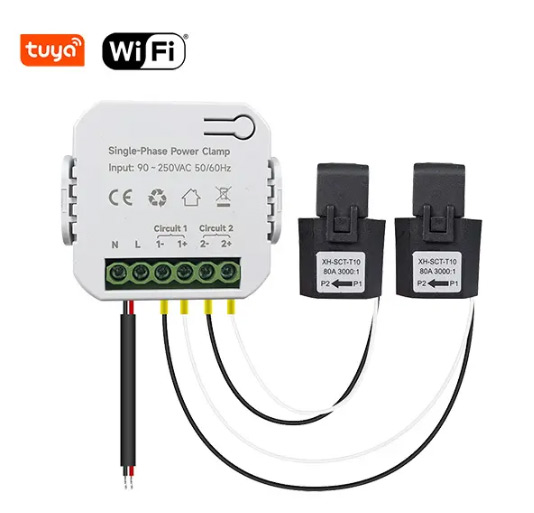
CT clamp-based WiFi smart energy meters
Use current transformer clamps to measure current without cutting cables, ideal for retrofits.
CT Clamp vs Non-Clamp Energy Meters (Key Differences)
One of the most important decisions is whether to use a CT clamp-based energy meter or a direct-wired (non-clamp) design.
| Feature | CT Clamp WiFi Smart Energy Meter | Non-Clamp WiFi Energy Meter |
|---|---|---|
| Installation | Non-intrusive, no cable cutting | Requires direct wiring |
| Retrofit Friendly | Yes | Limited |
| Current Range Flexibility | High (depends on CT size) | Fixed by design |
| Safety During Installation | Higher | Requires more precautions |
| Typical Use | Whole-house, retrofit, high-current lines | Fixed sub-circuit monitoring |
This comparison table helps buyers quickly understand which architecture better fits their project requirements—exactly the type of structured content Google favors.
What Can a WiFi Smart Energy Meter Measure?
Depending on model and configuration, WiFi smart energy meters typically measure:
-
Voltage (V)
-
Current (A)
-
Active Power (W)
-
Energy consumption (kWh)
-
Power factor (PF)
-
Frequency (Hz)
Advanced models also support bidirectional measurement, which is essential for solar PV systems and energy storage projects where electricity can flow both to and from the grid.
How WiFi Energy Monitoring Works in Practice
In a typical setup:
-
The energy meter measures electrical parameters in real time
-
Data is transmitted over WiFi to a connected platform
-
Users view usage trends, real-time load, and historical data
-
Alerts or rules can be configured based on consumption behavior
This architecture enables remote monitoring across multiple locations without dedicated gateways.
Common Use Cases for WiFi Smart Energy Meters
WiFi smart energy meters are widely used in:
-
Whole-home energy monitoring
-
Commercial tenant sub-metering
-
HVAC and equipment energy tracking
-
Solar self-consumption and export monitoring
-
Energy audits and efficiency projects
Their flexibility allows the same monitoring concept to scale from individual homes to distributed commercial facilities.
How to Choose the Right WiFi Smart Energy Meter
Before selecting a device, consider the following:
-
Electrical phase type (single, split, or three-phase)
-
Installation constraints (DIN rail vs clamp-based)
-
Required current range
-
Need for bidirectional measurement
-
Data usage (local app vs cloud platform integration)
A correct match between system requirements and meter design is more important than connectivity alone.
Frequently Asked Questions
Is WiFi reliable for energy monitoring?
When properly designed, WiFi smart energy meters provide stable and sufficient connectivity for real-time monitoring in residential and commercial environments.
Can one meter be used for both home and business?
Yes, provided the electrical phase and current range are appropriate for the installation.
Do WiFi smart energy meters automatically reduce energy consumption?
They do not reduce usage directly, but they enable informed decisions that lead to optimization and cost savings.
Considerations for Long-Term Energy Monitoring Projects
For long-term deployments, especially those involving multiple sites or future expansion, working with an experienced smart energy meter manufacturer can be critical. Device accuracy, firmware stability, and long-term availability all influence the success of energy monitoring projects.
Well-designed WiFi smart energy meters are built not only to measure power, but to support scalable, data-driven energy management over time.
Final Thoughts
A WiFi smart energy meter is more than a measurement device—it is a foundation for understanding and optimizing electricity usage. By selecting the right meter type and installation method, users gain continuous visibility into energy behavior and the ability to act on real data.
For anyone planning an energy monitoring project, understanding these fundamentals is the first step toward building a reliable and effective solution.