Why WiFi Energy Monitoring Is Gaining Attention
As electricity costs continue to rise and energy transparency becomes increasingly important, many users are searching for practical ways to monitor power consumption remotely. This has led to growing interest in solutions often described as WiFi energy monitor systems or smart WiFi energy monitors.
Although the terminology varies, the underlying goal is consistent: to gain real-time visibility into how electricity is consumed, generated, or distributed—without complex wiring or proprietary infrastructure.
What Is a WiFi Energy Monitor System?
A WiFi energy monitor system typically consists of two key elements:
-
Monitoring hardware that measures electrical parameters such as current, voltage, power, and energy
-
A WiFi-based data path that transmits measurements to a mobile app, cloud dashboard, or energy platform
Unlike traditional meters that require manual reading, WiFi-enabled systems provide continuous access to energy data, enabling users to identify inefficiencies, abnormal loads, or opportunities for optimization.
Smart WiFi Energy Monitors vs Traditional Energy Meters
A smart WiFi energy monitor differs from conventional meters in several ways:
-
Data is accessible remotely via WiFi
-
Installation often uses non-intrusive current clamps
-
Measurements can be visualized over time rather than read periodically
In many cases, the term “energy monitor” is used more broadly than “energy meter,” emphasizing usability and insights rather than just billing-grade measurement.
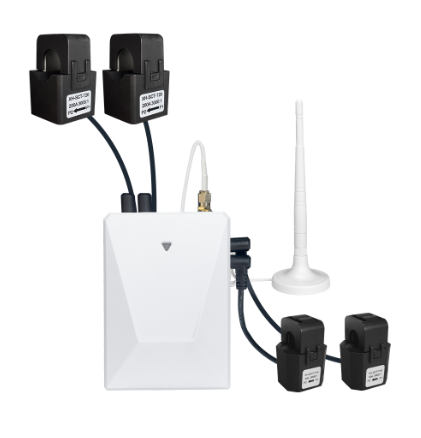
The Role of CT Clamps in WiFi Energy Monitoring
Many WiFi energy monitoring devices rely on current transformer (CT) clamps to measure current safely.
A WiFi energy monitor clamp allows installation without cutting or disconnecting conductors, which is especially valuable in retrofit projects. The choice of CT rating affects:
-
Measurement accuracy at low and high loads
-
Compatibility with different service amperages
-
Installation flexibility in residential and commercial panels
Correct CT selection is a key factor in achieving reliable monitoring results.
Tuya WiFi Energy Monitors and Platform Compatibility
Searches for Tuya WiFi energy monitor solutions usually indicate interest in ecosystem compatibility rather than measurement method.
Tuya-based energy monitors integrate with:
-
Mobile applications for visualization
-
Automation platforms
-
Cloud-based data storage and analysis
From a hardware perspective, Tuya compatibility does not change how electricity is measured—it defines how data is transmitted, managed, and shared across systems.
When a 3 Phase WiFi Power Monitor Is Required
Single-phase monitoring is sufficient for many residential applications, but 3 phase WiFi power monitors are essential in environments such as:
-
Commercial buildings
-
Industrial facilities
-
HVAC systems
-
Solar and distributed energy installations
Three-phase monitoring provides insight into phase balance, load distribution, and total system efficiency, making it critical for professional energy management.
Practical Considerations When Choosing a WiFi Energy Monitor
Before selecting a WiFi energy monitoring solution, users typically evaluate:
-
Electrical configuration (single-phase vs three-phase)
-
Current range and CT compatibility
-
Installation method (DIN rail, clamp-based, or panel-mounted)
-
Data access requirements (mobile app, web dashboard, API)
-
Platform integration (local monitoring vs cloud-based systems)
Understanding these factors helps ensure that the chosen solution aligns with both technical requirements and long-term monitoring goals.
WiFi Energy Monitoring Solutions from OWON
PC321: Flexible WiFi Energy Monitoring with CT Clamps
For applications requiring adaptable current measurement, OWON offers the PC321 WiFi energy monitor, designed for installations where CT flexibility is important. By supporting interchangeable CT clamps, it can be adapted to different service capacities and load profiles, making it suitable for both residential and light commercial monitoring scenarios.
The PC321 is often deployed as part of a broader WiFi energy monitor system where accurate current measurement and remote visibility are required.
PC341: Multi-Circuit and Three-Phase Energy Monitoring
For more complex installations, such as commercial panels or multi-load environments, the PC341 WiFi power meter enables monitoring across multiple circuits and supports three-phase measurement. This makes it appropriate for applications where understanding individual circuit behavior and overall system performance is critical.
In WiFi-based energy monitoring architectures, multi-circuit devices like PC341 help bridge the gap between basic monitoring and full-scale energy management.
Final Thoughts
The growing interest in WiFi energy monitor systems reflects a broader shift toward accessible, data-driven energy awareness. Whether through smart WiFi energy monitors, CT-based clamp solutions, or three-phase power monitoring devices, users are increasingly seeking clarity rather than complexity.
Understanding how these systems work—and how different monitoring approaches fit specific applications—helps ensure that energy data becomes a practical tool rather than just another data stream.