Deploying motion sensors in commercial IoT projects—be it for smart lighting, occupancy analytics, or security—often gets reduced to a simple checkbox: “needs motion sensor.” However, for system integrators and developers, the choice between a basic consumer sensor and a commercial-grade Zigbee motion sensor can determine the long-term reliability and intelligence of the entire system. The difference lies not in detecting motion, but in how accurately, reliably, and intelligently it’s done in dynamic real-world environments.
The Hidden Challenges: More Than Just “On” or “Off”
In a busy office, a warehouse, or a hotel corridor, a motion sensor faces complexities unknown in a static home:
-
False Triggers & Missed Detections: Airflow from HVAC units, light changes, or small animals shouldn’t trigger an event. Conversely, subtle human presence should be reliably captured.
-
Environmental Interference: Temperature fluctuations can affect sensor sensitivity. Dust accumulation on retail or industrial floors can obscure lenses over time.
-
Response Latency: For lighting control, a delay of even a few hundred milliseconds between detection and signal transmission becomes noticeable and frustrating for occupants.
-
Power & Network Efficiency: In large-scale deployments, inefficient sensors drain batteries faster, creating massive maintenance overhead.
Key Technical Benchmarks for Professional Use
Evaluating a sensor requires looking past the basic “detection range” spec sheet. Key benchmarks include:
-
Advanced Detection Logic: Look for sensors with algorithms that differentiate between human movement and other disturbances, often using patterns of infrared heat change rather than simple threshold crossing.
-
Environmental Compensation: High-quality sensors automatically calibrate their sensitivity to ambient temperature, maintaining consistent performance year-round.
-
Configurable Parameters: Professional settings for detection range, time delay, and lux threshold allow fine-tuning for specific zones (e.g., a high-sensitivity warehouse aisle vs. a low-sensitivity storage room).
-
Robust RF Performance & Low Power: A stable Zigbee connection is as crucial as the detection itself. Look for components that ensure high packet delivery rates while optimizing for multi-year battery life.
From Component to Insight: The Role of Data
A modern commercial sensor isn’t just a switch; it’s a data node. Beyond motion, many integrate ambient light sensing (lux measurement) and temperature monitoring. This multi-dimensional data stream, when fed into a building management system, enables richer automation: lights that adjust based on both occupancy and available daylight, or HVAC that responds to room usage patterns.
Choosing the Right Partner in the Supply Chain
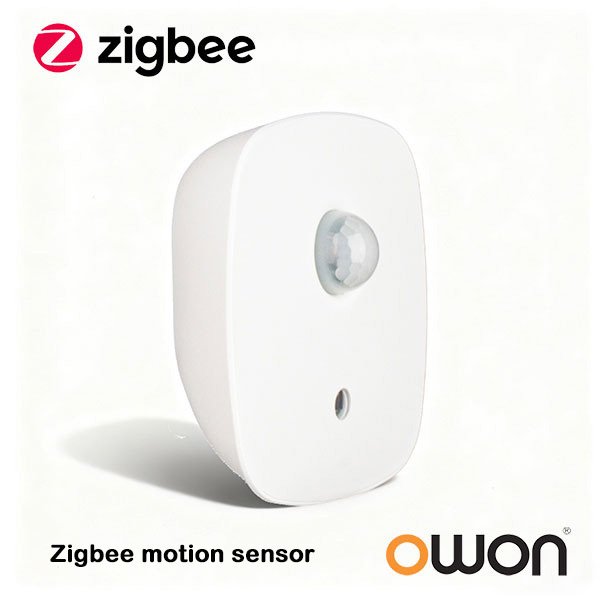
Given these complexities, sourcing becomes strategic. The variance in performance between a generic component and an engineered one is significant. For projects where reliability affects user experience or operational costs, partnering with a specialized Zigbee motion sensor supplier is critical.
A reputable supplier doesn’t just sell a part; they provide validated performance data, understand integration challenges in scaled deployments, and offer devices built to consistent standards. For instance, a supplier like OWON, which focuses on commercial IoT components, typically designs sensors that undergo rigorous testing for false-trigger resistance and environmental stability—factors that are paramount for professional installers but often undocumented in consumer-grade alternatives.
For architects and integrators designing the sensory layer of a smart building, delving into these technical nuances is essential. The goal is to build a network of perception that is not just functional, but trustworthy and insightful.
Related reading: