As smart homes become more connected and energy-aware, choosing the right communication technology is a critical decision when deploying a smart energy meter WiFi solution. Among the most common options, WiFi and Zigbee stand out as two widely adopted protocols for IoT energy monitoring.
This article explains the key differences between WiFi and Zigbee smart energy meters, focusing on network stability, performance, and suitability for residential and light commercial applications.
Understanding Smart Energy Meter Connectivity
A smart energy meter does more than measure electricity usage—it acts as a data node in a connected energy management system. Connectivity determines how reliably usage data is transmitted to cloud platforms, mobile apps, or local energy dashboards.
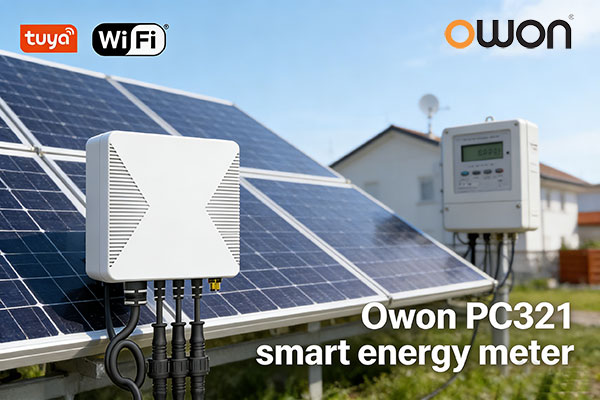
Both WiFi and Zigbee enable real-time energy monitoring, but they differ significantly in architecture and use cases.
Smart Energy Meter WiFi: Direct and High-Speed Connectivity
A smart energy meter WiFi connects directly to a home or office router, sending consumption data to cloud servers without requiring an additional gateway.
Key advantages:
-
High data transmission speed
-
Direct internet access
-
Easy setup for residential users
-
Ideal for remote monitoring via mobile apps
Limitations:
-
Higher power consumption
-
Performance depends on router quality
-
Less suitable for dense device networks
WiFi-based meters are commonly used in apartments, houses, and small offices where stable broadband access is already available.
Zigbee Energy Meter: Low Power and Scalable Networks
A Zigbee energy meter uses a mesh networking structure, where devices communicate through a central gateway or hub. This architecture is widely adopted in professional smart home and building automation systems.
Key advantages:
-
Extremely low power consumption
-
Stable mesh networking
-
Better performance in multi-device environments
-
Strong interoperability with smart home platforms
Limitations:
-
Requires a Zigbee gateway
-
Slightly higher system complexity
Zigbee energy meters are often preferred in large homes, multi-unit buildings, and commercial projects.
WiFi vs Zigbee Smart Energy Meter: Side-by-Side Comparison
| Feature | Smart Energy Meter WiFi | Zigbee Energy Meter |
|---|---|---|
| Network Type | Star (router-based) | Mesh (gateway-based) |
| Internet Access | Direct | Via gateway |
| Power Consumption | Medium to high | Very low |
| Installation Complexity | Simple | Moderate |
| Scalability | Limited | Excellent |
| Smart Home Integration | App-based | Platform-based |
| Typical Use Case | Homes & apartments | Smart homes & buildings |
This comparison highlights why both technologies coexist rather than compete directly.
Network Stability: Which Performs Better?
Network stability is a major concern for IoT energy monitoring, especially when continuous data logging is required.
-
WiFi smart energy meters perform well in environments with strong router coverage and minimal interference. However, network congestion can affect reliability.
-
Zigbee energy meters benefit from mesh routing, allowing signals to bypass interference and maintain stable communication even in complex layouts.
For long-term, uninterrupted monitoring, Zigbee networks generally offer higher resilience.
Home vs Commercial Energy Monitoring Scenarios
Residential Homes
-
WiFi meters offer simplicity and quick deployment
-
Suitable for individual households
-
Ideal for app-based energy visualization
Commercial & Multi-Unit Buildings
-
Zigbee meters scale more efficiently
-
Support centralized energy management
-
Better for dense IoT device environments
Choosing the right technology depends on the size of the installation and future expansion plans.
Which Smart Energy Meter Is Right for You?
There is no universal answer. A smart energy meter WiFi is often the best choice for homeowners seeking simplicity, while Zigbee-based meters excel in structured, scalable energy monitoring systems.
Both technologies play a vital role in modern smart energy metering, enabling data-driven decisions, energy optimization, and smarter consumption behavior.
Conclusion
When comparing WiFi and Zigbee smart energy meters, the key factors are network stability, scalability, and deployment environment. Understanding these differences helps homeowners, system integrators, and solution providers select the most suitable technology for reliable IoT energy monitoring.
As smart homes and buildings continue to evolve, both WiFi and Zigbee will remain essential components of intelligent energy management systems.