As global energy costs continue to rise and households demand better visibility into electricity usage, the smart energy meter has become an essential component of modern energy management systems. Unlike traditional electric meters, smart energy meters provide real-time data, remote access, and integration with smart home platforms, enabling homeowners to make informed decisions about energy consumption.
What Is a Smart Energy Meter?
A smart energy meter is an advanced digital device that measures electricity usage and transmits consumption data automatically via wireless communication technologies such as WiFi, Zigbee, or cellular networks.
Unlike conventional meters that require manual readings, smart meters provide continuous monitoring, detailed usage reports, and remote data access through mobile apps or cloud platforms.
Key characteristics include:
-
Real-time energy monitoring
-
Two-way data communication
-
Integration with IoT and smart home systems
-
Higher measurement accuracy
A typical smart energy metering system consists of:
-
Measurement Unit – Measures voltage, current, power, and energy consumption
-
Communication Module – WiFi, Zigbee, or NB-IoT transmits data
-
Cloud Platform – Stores and analyzes usage data
-
User Interface – Mobile app or web dashboard
This IoT-based structure allows users to track consumption trends, detect abnormal usage, and optimize household energy efficiency.
Smart Energy Meter vs Regular Electric Meter
| Feature | Regular Electric Meter | Smart Energy Meter |
|---|---|---|
| Data Collection | Manual reading | Automatic & real-time |
| Connectivity | None | WiFi / Zigbee / IoT |
| Usage Insights | Monthly total only | Hourly or real-time data |
| Smart Home Integration | Not supported | Supported |
| Accuracy | Standard | High precision |
This comparison clearly explains why smart meters are increasingly replacing traditional meters in residential and small commercial environments.
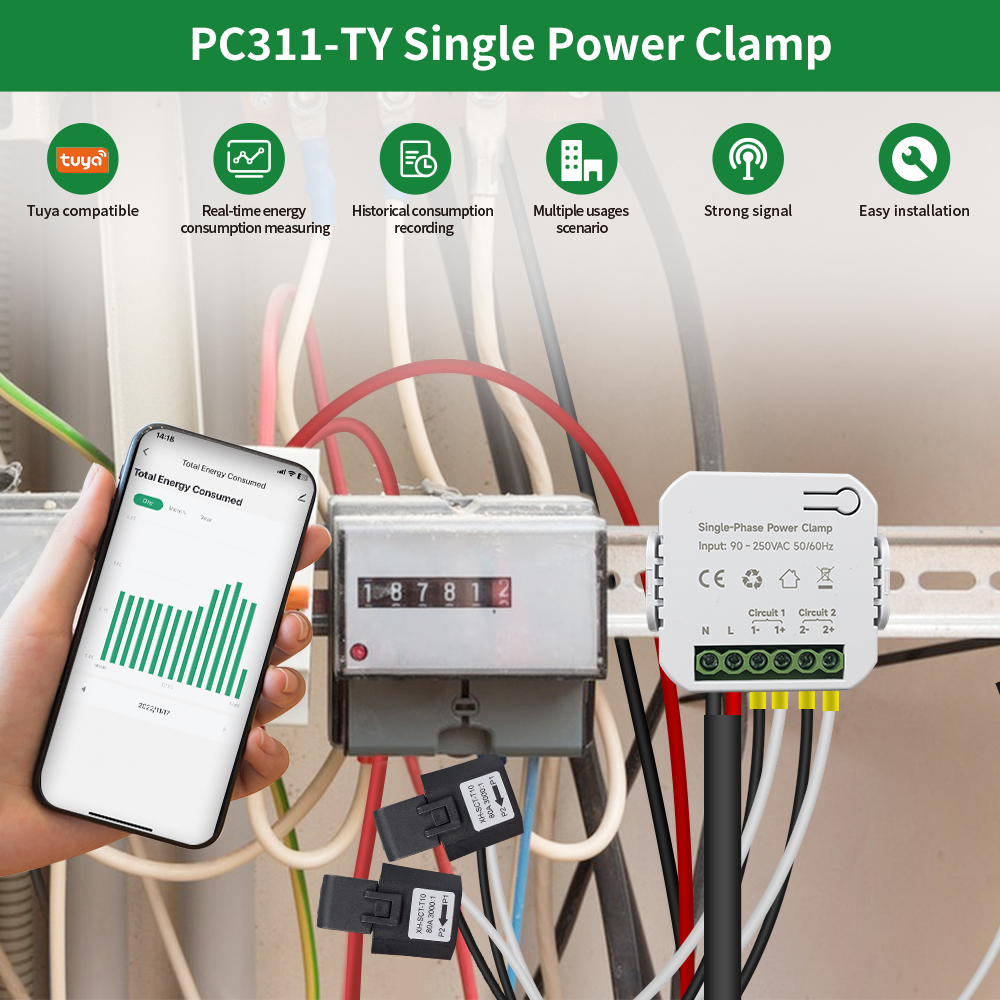
Smart Energy Meter for Home Automation & Home Assistant
Many homeowners now use smart energy meters with Home Assistant or similar platforms to build fully automated energy management systems.
By integrating a smart energy meter into Home Assistant, users can:
-
Monitor real-time power consumption
-
Trigger automations based on energy thresholds
-
Optimize solar, battery, or HVAC usage
-
Reduce unnecessary standby power
This capability makes smart energy meters a core device in modern smart homes.
Are There Downsides to Smart Energy Meters?
While smart meters offer clear advantages, some concerns still exist:
-
Initial installation cost
-
Data privacy considerations
-
Dependence on network stability
However, for most households, the long-term benefits—energy savings, transparency, and automation—outweigh these limitations.
Why Some People Replace or Disable Smart Meters
In rare cases, users choose to remove smart meters due to:
-
Misunderstanding of data privacy policies
-
Poor installation quality
-
Incompatibility with legacy systems
These issues are usually related to early-generation devices rather than modern smart energy metering solutions.
Global Supply and Smart Energy Meter Manufacturers in China
Today, many smart energy meter manufacturers in China supply high-quality devices to global markets. Chinese manufacturers are known for:
-
Strong hardware engineering capabilities
-
Competitive pricing
-
Flexible OEM/ODM services
-
Support for multiple communication protocols
For international system integrators, utilities, and smart home brands, China remains one of the most important sourcing hubs for smart energy metering technology.
Energy Consumption Example (Illustrative Bar Chart)
Daily Energy Usage (kWh)
|■■■■■■■■■■■■■ HVAC
|■■■■■■■■■ Kitchen
|■■■■■ Lighting
|■■■ Other Devices
Visual energy breakdowns like this help users identify high-consumption appliances and optimize household usage patterns.
Conclusion
The smart energy meter is no longer just a utility device—it is a foundation for intelligent energy management. From real-time monitoring and smart home integration to global IoT connectivity, smart meters empower homeowners to take control of their energy usage in a smarter, more efficient way.
As adoption continues to grow worldwide, smart energy metering will play a crucial role in sustainable and data-driven energy consumption.