Water leaks remain one of the most underestimated risks in residential and commercial buildings. Unlike fires or power failures, leaks often develop silently—behind walls, under equipment, or in utility areas—causing structural damage, operational downtime, and costly repairs before anyone notices.
As buildings become more connected and automation-driven, traditional standalone water alarms are no longer sufficient. This has led to growing adoption of ZigBee water leak sensors as part of integrated building safety and monitoring systems.
This article explores why ZigBee-based leak detection is increasingly used across basements, HVAC rooms, and smart building environments, and how it differs from conventional approaches.
Why Traditional Water Leak Alarms Fall Short
Conventional water leak alarms typically rely on local sound alerts. While simple and inexpensive, they introduce several limitations:
- Alerts are only effective if someone is physically nearby
- No centralized monitoring across multiple locations
- No integration with building management or automation systems
- Limited scalability in larger properties
In multi-unit residential buildings, hotels, offices, and technical facilities, these gaps can result in delayed responses and significant secondary damage.
What Is a ZigBee Water Leak Sensor?
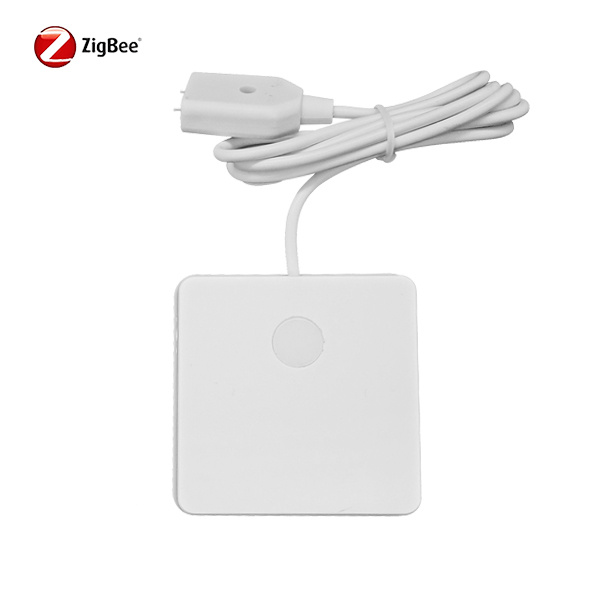
A ZigBee water leak sensor is a compact wireless device that detects the presence of water and transmits alerts through a ZigBee mesh network to a central gateway or control platform.
Key characteristics include:
- Low power consumption, enabling long battery life
- Mesh networking, allowing devices to relay signals and improve coverage
- Stable indoor communication, especially in enclosed or underground areas
- Real-time alert delivery to centralized systems
Unlike Wi-Fi sensors, ZigBee devices are optimized for sensor networks rather than continuous data streaming, making them better suited for large-scale deployments.
Why ZigBee Works Well in Basements and Utility Areas
Basements, mechanical rooms, and utility spaces often pose challenges for wireless communication due to concrete walls, metal structures, and limited signal paths.
ZigBee addresses these challenges through its mesh architecture:
- Sensors can communicate via nearby nodes instead of relying on a single access point
- Network reliability improves as more ZigBee devices are added
- Low-power operation reduces maintenance in hard-to-access locations
This makes ZigBee water leak sensors a practical choice for monitoring sump pumps, water heaters, HVAC condensate lines, and pipe junctions.
Beyond Basements: Leak Detection Across Smart Buildings
While basements are a common starting point, water leaks occur throughout modern buildings. ZigBee leak sensors are increasingly deployed in:
- HVAC and mechanical rooms
- Pipe shafts and risers
- Boiler and pump rooms
- Data centers and equipment spaces
- Parking garages and underground facilities
When connected to a gateway, these sensors enable centralized visibility across multiple zones—supporting faster response and preventive maintenance strategies.
Integration with Smart Building Platforms
One of the key advantages of ZigBee-based leak detection is its ability to integrate with broader building systems.
Through a ZigBee gateway, leak sensors can:
- Trigger alerts in facility management dashboards
- Activate sirens or warning indicators
- Initiate automated responses, such as valve shut-off
- Log events for maintenance analysis and compliance reporting
This shifts leak detection from a reactive function to a proactive component of building operations.
Real-World Implementation Considerations
When deploying ZigBee water leak sensors at scale, system designers typically consider:
- Sensor placement based on water-risk assessment
- Network coverage and gateway positioning
- Alert escalation workflows
- Integration with existing building management systems
In practice, many solution providers prefer ZigBee sensors built on open standards to avoid vendor lock-in and ensure long-term system flexibility.
Reference Implementation: Commercial-Grade ZigBee Leak Sensors
Several manufacturers like OWON now offer ZigBee water leak sensors designed for professional deployments rather than consumer-only use. These devices are typically characterized by:
- Stable ZigBee protocol compliance
- Long battery life for low-maintenance operation
- Compatibility with mainstream ZigBee gateways
- Compact design for discreet installation
Products such as the WLS316 ZigBee water leak sensor are often cited as examples of how leak detection can be integrated into broader smart building safety architectures without adding operational complexity.
The Future of Leak Detection in Smart Buildings
As buildings continue to evolve toward data-driven management, leak detection will increasingly be treated as part of a unified safety and monitoring strategy rather than a standalone alarm.
ZigBee water leak sensors offer a scalable, low-power foundation that aligns well with this shift—especially in environments where reliability, coverage, and system integration matter more than consumer convenience features.
Final Thoughts
Preventing water damage is no longer just about detecting leaks—it’s about detecting them early, remotely, and in context.
For modern buildings, ZigBee water leak sensors provide a practical path toward smarter, more resilient safety systems that can grow alongside broader automation initiatives.