As Zigbee networks evolve from simple residential setups into large-scale smart home and building automation systems, the role of the Zigbee gateway has fundamentally changed. It is no longer just a pairing hub—it has become the core infrastructure layer that determines system stability, scalability, and long-term integration flexibility.
This article provides an architectural perspective on how to evaluate a universal Zigbee gateway, focusing on real-world deployment factors such as Ethernet vs wireless connectivity, Zigbee 3.0 interoperability, MQTT-based integration, and compatibility with platforms like Home Assistant.
From Zigbee Hub to Infrastructure Gateway
Many consumer discussions still refer to Zigbee gateways as “hubs,” but in professional deployments, the distinction is critical.
A Zigbee hub typically:
-
Serves a closed ecosystem
-
Relies heavily on cloud control
-
Offers limited third-party integration
A Zigbee gateway, by contrast, acts as:
-
A Zigbee 3.0 coordinator
-
A bridge between Zigbee mesh networks and IP-based systems
-
An integration point for local servers, cloud platforms, or BMS systems
For smart home projects that scale beyond a single apartment—or for any smart building application—the gateway becomes long-term infrastructure rather than a disposable accessory.
Zigbee Gateway 3.0 and Multi-Vendor Interoperability
Zigbee 3.0 unified previously fragmented profiles (HA, ZLL, SE), significantly improving cross-vendor interoperability. A Zigbee gateway 3.0 ensures that devices from different manufacturers—lighting, HVAC, sensors, and energy meters—can coexist within a single network.
In practice, system integrators increasingly prioritize universal Zigbee gateways that:
-
Support heterogeneous device ecosystems
-
Avoid vendor lock-in
-
Enable long-term expansion without re-commissioning the network
This is especially important in retrofit scenarios where device brands may vary over time.
Ethernet vs WLAN: Why Network Uplink Matters
One of the most underestimated decisions in Zigbee gateway selection is uplink connectivity.
Zigbee Gateway with Ethernet / LAN
Ethernet-connected gateways provide:
-
Higher network stability
-
Lower latency
-
Better performance in dense RF environments
They are commonly used in:
-
Hotels and serviced apartments
-
Commercial buildings
-
Energy management systems
Wireless Zigbee Gateway (Wi-Fi / WLAN)
Wi-Fi-based gateways offer flexibility and are often suitable for:
-
Residential smart homes
-
Small-scale deployments
-
Retrofit installations without Ethernet access
In many professional projects, Ethernet Zigbee gateways form the backbone, while Wi-Fi is used selectively based on site constraints.
MQTT and Open Integration: Beyond Consumer Automation
As smart systems mature, local control and data ownership become increasingly important. This is where Zigbee gateway MQTT support plays a key role.
MQTT-enabled architectures allow:
-
Real-time device data streaming
-
Integration with dashboards, analytics platforms, or private clouds
-
Reduced dependency on vendor-managed cloud services
Combined with open APIs, MQTT transforms a Zigbee gateway from a consumer hub into a data-driven automation node.
Zigbee Gateway Integration with Home Assistant
The growing adoption of Home Assistant highlights demand for open, flexible automation platforms. A Zigbee gateway compatible with Home Assistant enables:
-
Local automation without cloud latency
-
Advanced rule engines
-
Seamless integration across lighting, HVAC, and energy devices
From a system design perspective, Home Assistant compatibility is less about branding and more about architectural openness.
Practical Reference: Gateway Platforms Designed for Scale
Some gateway platforms are engineered specifically for these requirements.
For example Owon‘s product:
-
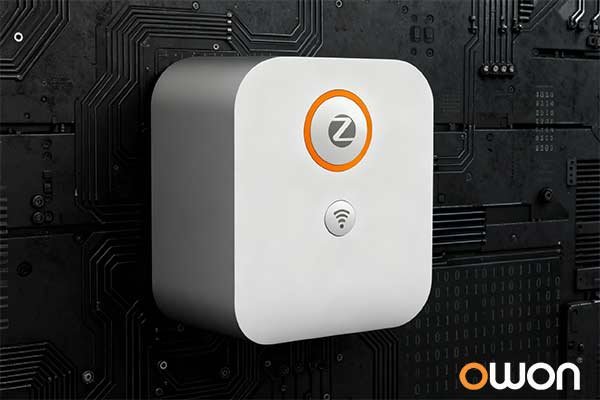
SEG-X3 represents a compact smart Zigbee gateway with Wi-Fi, suitable for residential and small commercial systems that require Zigbee 3.0 coordination and cloud or local API integration.
-
SEG-X5 illustrates an Ethernet-based Zigbee gateway, often deployed in projects that demand higher device capacity, local automation, and server-level integration.
These platforms reflect how modern Zigbee gateways are increasingly positioned as scalable infrastructure components rather than consumer accessories.
Deployment Considerations for Integrators and Solution Architects
When deploying Zigbee gateways at scale, experienced teams evaluate:
-
Gateway placement and mesh topology
-
Ethernet vs WLAN availability
-
MQTT and API requirements
-
Firmware lifecycle and security updates
Selecting the right gateway architecture early can significantly reduce integration complexity and long-term maintenance costs.
Conclusion
A smart Zigbee gateway is no longer defined by app features alone. Its true value lies in architecture, openness, and scalability. Whether supporting Home Assistant, MQTT-based systems, or smart building platforms, a universal Zigbee gateway should be treated as core infrastructure—designed to evolve alongside the system it supports.