The Hidden Weak Point in Many Smart Energy Systems
As smart home and building automation projects scale, many systems begin to fail—not because of poor devices, but because of fragile system architecture.
In real-world deployments, especially in energy management and HVAC control, reliability matters more than flashy features. Cloud outages, network latency, and fragmented device communication often prevent systems from responding correctly when it matters most.
This is why system designers are increasingly rethinking architecture and focusing on local control, stable device communication, and deterministic automation. At the center of this shift are two essential components: the Zigbee WiFi gateway and the DIN rail relay Zigbee module.
Why Local Control Is Becoming a System Requirement
Cloud platforms provide scalability and remote access, but relying entirely on cloud logic introduces risk:
-
Automation stops during internet outages
-
Latency affects HVAC and load response times
-
Energy optimization becomes reactive instead of proactive
-
System operators lose visibility during connectivity failures
For energy and HVAC systems, delays of even a few seconds can impact comfort, safety, and energy cost.
A hybrid architecture—where local gateways handle real-time logic while cloud platforms manage analytics and visualization—is increasingly seen as best practice.
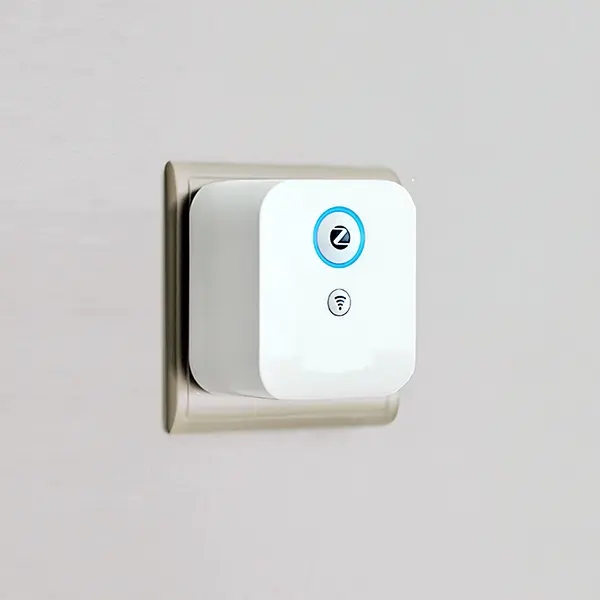
The Role of a Zigbee WiFi Gateway in Modern Architectures
A Zigbee WiFi gateway acts as the bridge between low-power device networks and IP-based platforms. Its importance goes far beyond simple protocol translation.
Key functions include:
-
Maintaining a stable local Zigbee mesh network
-
Executing automation rules locally
-
Aggregating data from meters, thermostats, and sensors
-
Exposing APIs to cloud or third-party systems
Because Zigbee devices communicate locally, gateways ensure that HVAC control, load switching, and energy automation continue even when cloud services are unavailable.
Why DIN Rail Relay Zigbee Modules Matter in Energy Systems
While sensors and meters provide data, control happens through relays.
A DIN rail relay Zigbee module enables:
-
Reliable switching of high-load circuits
-
Integration into electrical panels and distribution boards
-
Direct control of HVAC equipment, lighting, and energy loads
-
Secure participation in local automation logic
DIN rail mounting is particularly important in professional deployments, where electrical safety, scalability, and maintainability are critical.
Without relay-level control, energy management systems are limited to observation rather than action.
From Device Automation to System Coordination
Many smart systems fail because devices operate independently:
-
Thermostats adjust temperature without considering total load
-
Energy meters report data but do not influence control
-
Relays switch loads without understanding system context
A gateway-centric architecture changes this dynamic.
By connecting energy meters, HVAC controllers, sensors, and relays through a local gateway, systems can:
-
Prioritize loads during peak demand
-
Coordinate HVAC operation with energy availability
-
Execute automation rules without cloud dependency
-
Maintain consistent behavior across different subsystems
This coordination is the foundation of effective Home Energy Management.
Practical Use Cases for Gateways and DIN Rail Relays
Load Shedding and Peak Management
Relays disconnect non-critical loads when total energy consumption exceeds defined thresholds.
HVAC and Energy Coordination
HVAC operation is adjusted based on real-time energy data and system priorities.
Distributed Energy Systems
Gateways manage communication between solar inverters, meters, and controlled loads.
Smart Panels and Retrofits
DIN rail Zigbee relays enable modular upgrades without replacing entire panels.
Why System Scalability Depends on Architecture
As deployments grow from tens to thousands of devices, architectural decisions become critical.
Systems built around:
-
Local gateways
-
Standardized device communication
-
Panel-mounted control modules
scale more predictably than cloud-only, app-centric solutions.
This approach reduces operational risk and simplifies long-term maintenance.
How OWON Supports Gateway-Centric Energy and HVAC Systems
OWON designs Zigbee devices, gateways, and control modules specifically for system-level integration, not isolated operation.
By combining:
-
Zigbee WiFi gateways with local automation capability
-
DIN rail relay Zigbee modules for load control
-
Energy meters, thermostats, and sensors
OWON enables partners to build stable, scalable architectures that support energy management and HVAC control across residential and light commercial environments.
Rather than focusing on individual devices, OWON emphasizes interoperability, local reliability, and long-term deployment stability.
From Local Control to Full Home Energy Management
Gateways and relays are not endpoints—they are enablers.
When integrated into a broader Home Energy Management System, they allow:
-
Energy-aware automation
-
HVAC coordination
-
Reliable local decision-making
-
Seamless cloud integration when available
This system-level design ensures that energy optimization remains consistent, resilient, and scalable.
Conclusion: Reliable Systems Start with the Right Architecture
In smart energy and HVAC projects, reliability is not achieved through cloud dashboards alone. It is built through thoughtful system architecture that prioritizes local control, stable communication, and actionable automation.
Zigbee WiFi gateways and DIN rail Zigbee relays play a critical role in this architecture, enabling energy and HVAC systems to operate reliably under real-world conditions.
As energy systems continue to evolve, gateway-centric designs will remain a cornerstone of effective Home Energy Management.