The Challenge of HVAC System Diversity
Light commercial HVAC projects rarely involve a single system type. Buildings often combine gas furnaces, heat pumps, radiant heating, and multi-stage cooling systems within the same project.
This diversity creates a challenge for system designers and integrators: selecting thermostats that can reliably support different HVAC configurations without introducing complexity or compatibility issues.
Why System Compatibility Matters in Light Commercial Projects
Unlike residential installations, light commercial HVAC deployments often require:
-
Standardized device platforms
-
Consistent control behavior across systems
-
Long-term product availability
A thermostat that supports only a narrow set of HVAC configurations can limit design flexibility and increase maintenance complexity.
Key Requirements for Multi-System WiFi Thermostats
smart thermostats designed for light commercial HVAC must typically support:
-
24VAC HVAC systems
-
Multi-stage heating and cooling
-
Heat pump and dual-fuel configurations
-
Integration with auxiliary equipment
Meeting these requirements allows a single thermostat platform to be deployed across diverse project environments.
How Modern WiFi Thermostats Address System Diversity
Modern WiFi thermostats are increasingly designed as flexible control platforms rather than fixed-function devices. By supporting multiple HVAC modes and system types, they enable integrators to standardize on a single hardware solution.
This approach simplifies:
-
Installation and commissioning
-
Training and maintenance
-
Spare parts management
It also reduces the risk associated with future system upgrades or changes.
A Platform-Based Approach to HVAC Control
OWON Smart develops smart thermostat platforms that are designed to support a wide range of HVAC systems commonly used in light commercial and multi-family buildings.
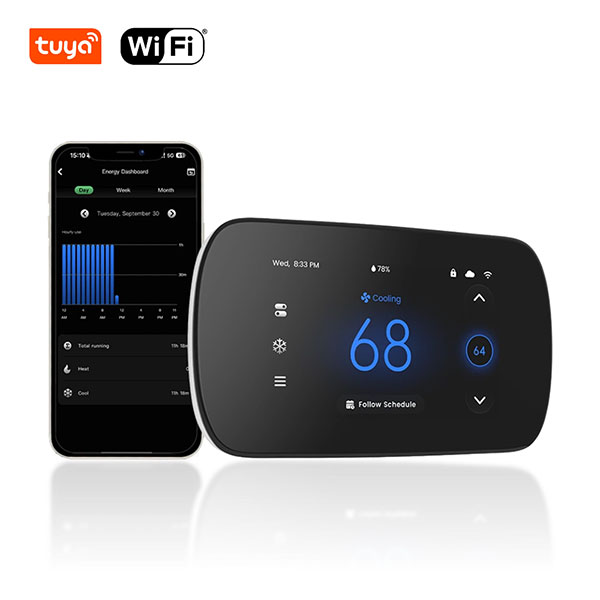
The PCT533 WiFi thermostat, for example, is compatible with 24VAC HVAC systems including furnaces, heat pumps, and dual-fuel setups. This flexibility allows system integrators to deploy a consistent thermostat solution across different HVAC configurations without redesigning control logic for each project.
Deployment Considerations for HVAC Projects
When selecting WiFi thermostats for multi-system environments, HVAC professionals should evaluate:
-
System compatibility and configuration options
-
Stability across long-term deployments
-
Integration with cloud-based management platforms
-
Suitability for scalable project deployment
A platform-oriented thermostat strategy helps ensure consistent performance across diverse HVAC systems.
Conclusion
As light commercial HVAC projects become more complex, the need for flexible and system-compatible thermostats continues to grow. WiFi thermostats designed for multi-system environments enable integrators to standardize control strategies while maintaining the flexibility required by real-world projects.
By supporting a wide range of HVAC configurations, modern WiFi thermostats provide a practical foundation for scalable and reliable HVAC control.