Introduction: The Data Gap in Distributed Solar Energy
The rapid expansion of rooftop solar and behind-the-meter storage represents a significant shift in energy infrastructure. For installers, integrators, and commercial clients, this shift introduces a critical operational challenge: a profound lack of actionable data. Standard utility meters were designed for a one-way flow, leaving stakeholders in the dark about the most important metrics—how much energy is truly self-consumed, the precise performance of the PV array, and whether the system complies with evolving grid codes.
This data gap transforms into tangible business risks: uncertain return on investment calculations for the end-client, compliance headaches for the installer, and operational inefficiencies for the facility manager. The resolution lies in moving beyond basic kilowatt-hour counting to deploying specialized solar smart meters and bidirectional energy meters that are engineered for the complexities of two-way energy flow.
Core Technical Requirements for Solar-Optimized Metering
Selecting the right metering hardware is foundational. A device suited for solar applications must deliver on several non-negotiable fronts to provide value and ensure system integrity.
1. True Bidirectional Measurement with High Fidelity
The primary function is to independently and accurately measure current flow in both directions. High accuracy (Class 1.0 or better) across the load range is crucial. This is not merely for billing; it is the bedrock for calculating true self-consumption rates, validating system performance guarantees, and providing transparent data for sustainability reporting. A bidirectional energy meter acts as the system’s impartial judge, quantifying import, export, and on-site generation.
2. Dynamic Control for Grid Compliance (Zero Export)
As grid penetration of renewables increases, utilities are mandating strict zero export or export-limiting configurations to maintain local grid stability. A capable meter must do more than measure; it must act as a sentinel. This requires a fast sampling rate and the ability to send a near-instantaneous dry contact or Modbus signal to the inverter to curtail output the moment export is predicted, often within a 1-2 second window. An effective zero export meter setup prevents costly penalties and keeps the system online.
3. Robust & Flexible Communication
Data must flow reliably from the meter to where it can create value. The communication protocol must match the project’s architecture:
-
Wi-Fi/Ethernet: Ideal for sites with reliable networks, enabling direct cloud connectivity for remote monitoring platforms.
-
Cellular (4G): Provides an “always-on” independent connection for distributed asset fleets or sites without stable internet.
-
RS-485 with Modbus: The industrial-standard, wired workhorse for direct, low-latency integration with inverters, battery controllers, and building management systems (BMS).
From Industry Challenges to Practical Solutions: A Manufacturer’s Approach
The technical requirements outlined above set the standard for the industry. Manufacturers that specialize in IoT for energy, such as Owon, design their smart metering products to address these specific challenges directly. Their design philosophy often emphasizes installation-friendly form factors and integration-ready communication, which are critical for reducing total project cost and complexity.
For solar and storage applications, this translates into several key product features:
-
Hardware Designed for Bidirectional Accuracy: Their metering solutions are built with chipset architectures dedicated to high-fidelity measurement of bidirectional active power. This ensures clean separation of solar generation and load consumption data, forming the reliable foundation required for detailed solar edge smart meter-level performance analytics.
-
Architecture Optimized for Compliance Control: Devices support configurable alarm thresholds and provide fast-response dry contact or digital outputs. This allows them to form a reliable control loop with most major inverters, enabling robust zero export functionality to meet stringent grid codes.
-
Configurability for Integrators: Offering a choice of communication interfaces—such as RS-485 with Modbus RTU, Wi-Fi, or 4G—coupled with detailed protocol documentation empowers system integrators to seamlessly feed data into their preferred monitoring software or energy management platform.
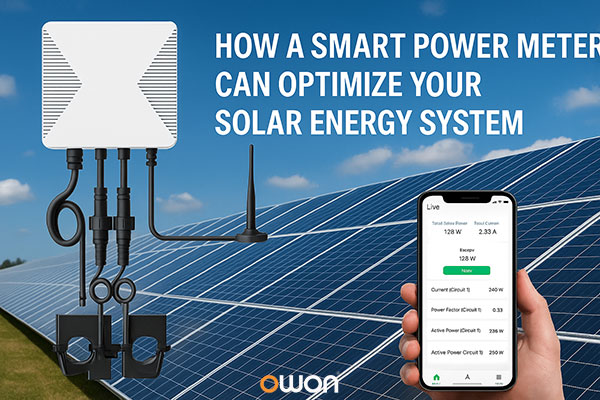
A practical example is Owon Clamp Meter Series. The use of split-core current transformers is a standout feature, particularly for retrofit solar projects. It allows for safe and rapid installation without the need to disconnect main power cables, significantly reducing deployment time and associated risks.
Conclusion: Metering as a Strategic Asset
In today’s energy landscape, metering is no longer a passive utility component but a strategic asset for any solar or storage project. The right smart meter for solar panels delivers the transparency needed to prove financial returns, ensures seamless grid compliance to avoid disruptions, and provides the granular data required for operational optimization.
For project developers and installers, partnering with a technical provider that understands these nuances is crucial. It involves selecting a manufacturer whose hardware is not only accurate and reliable but also designed for the real-world challenges of installation and integration. For firms looking to develop their own branded solutions or require specific customizations, engaging with an experienced OEM/ODM partner can provide the tailored hardware foundation necessary to bring a differentiated energy management product to market efficiently. The goal is to turn raw data into decisive action and lasting value.